The Anonymous Guest
Friends of Branded!
Happy Saturday and I hope you had a great week.
Early on Thursday morning this week, I received a text from Schatzy that PAR Technology Corp had agreed to acquire shopper intelligence platform Bridg, a division of Cardlytics.
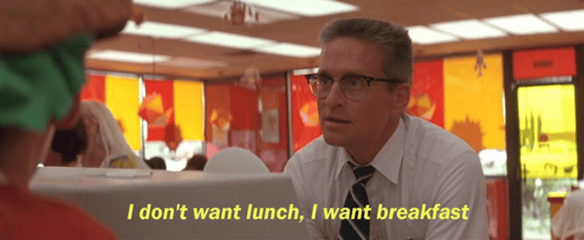
To be fair, Schatzy and I have different ideas of what “early” means when it comes to the workday, but without going into too much detail, I can say that McDonald’s was still serving breakfast when his text landed on my phone.
Bridg is an identity resolution and shopper intelligence platform. Now in human speak, Bridg’s platform converts in‑store transactions into enriched customer profiles. This brings transparency and light to previously unknown shoppers and allows brands to integrate them into a brand’s first‑party data set. You can think of this PAR + Bridg deal as a flare gun that says: ResTech is consolidating around the data layer and specifically identity resolution and guest intelligence.
In the world of finance, there’s an acronym that carries significance, “KYC” or Know Your Customer.
KYC is a mandatory due diligence process used by financial institutions and other regulated industries to verify the identity of their clients. Its primary goal is to prevent financial crimes like money laundering, terrorist financing, and fraud by ensuring customers are who they claim to be. But the world of finance has no exclusivity or proprietary relationship with this acronym and as I bring this back to hospitality, let me be as clear as possible, whoever owns the single view of the guest, will win and specifically succeed in influencing ordering, loyalty, marketing, and attribution.
Let’s take a step back before charging ahead. Think of this as our Back to the Future moment.

For years, restaurant technology was sold as tools. A better Point of Sale (“POS”), a smarter loyalty program, a faster online ordering flow.
But that era is ending and the next phase of ResTech is about control. PAR Technology acquiring Bridg isn’t another feature grab, it’s a land grab for the guest. PAR didn’t buy Bridg to add another dashboard, it bought an identify resolution platform b/c whoever owns identify owns attribution. Whoever owns attribution owns marketing dollars. Whoever owns marketing dollars shapes operator behavior.
This is a consolidation story hiding in plain sight!
Sitting at the intersection of hospitality, technology and capital is the cerebral sport that I feel very fortunate that get to play every day (and I need to express gratitude to my very understanding wife and daughter for letting me play this sport the way I do), but that shouldn’t take away from a most interesting game of chess taking place among some of the industry’s big dogs.
Toast is consolidating around operator workflow gravity and the daily operating system for the mid-market operators (POS, labor, invoicing, scheduling, drive-thru).
NCR Voyix is reinforcing its role as the enterprise backbone (standardization, payments, and services for large, complex brands).
Olo (now Thoma Bravo backed) is assembling an enterprise engagement stack (digital ordering, payments, guest intelligence, and loyalty).

Each of the above is taking a different path but they also have the same destination, which is that platform control beats point solutions!
As an operator-centric platform, Branded is focused on what this consolidation means for operators (the cohort that matters the most)!
For mid-market operators, the consolidation feels like a win! Fewer vendors, fewer integrations, and faster deployment! Winner-winner-chicken-dinner!
But the tradeoffs are real. Vendor lock-in, price creep and data trapped inside the platform.
Don’t worry Mr. Brandon Barton (CEO at Bite), enterprise operators still want best-of-breed, but the battleground has shifted. Requests for Proposals (“RFPs”) are no longer about feature parity or user interface polish. They’re now about who owns the guest identity, how attribution is calculated, and whether you can audit the data.
Identity and measurement are now Tier-1 infrastructure decisions, right alongside POS.
Operators, friends, Branded loves its technology partners, but (respectfully) you’re still negotiating your contracts like it’s 2018! You’re focused on the price per terminal, the contract length, and your service level agreements.
Meanwhile, tech platforms are negotiating for data ownership, attribution logic, and ecosystem control. This imbalance is where leverage gets lost.

For investors, the lesson is blunt: point solutions are becoming features; identity, data and payments are the most defensible layers and consolidation will accelerate, not slow down.
The smartest question in diligence today isn’t “how fast is the company growing?” It’s “who loses leverage if this company controls the guest?”
The bottom line and maybe the hard truth, ResTech is NOT consolidating to make life easier for operators (sorry, not sorry). It’s consolidating in order to own the guest, which then makes the technology provider a more indispensable partner for restaurants.
Owning the guest translates into owning the economics.
Look at SevenRooms. It’s not a POS, it’s not a delivery marketplace and it doesn’t touch the food, but it built an outsized strategic platform by controlling one thing exceptionally well, the direct relationship between the restaurant and the guest.
SevenRooms aligned themselves with operator economics, not against them. That’s what made SevenRooms so attractive to DoorDash (how attractive? $1.2 billion attractive!). The acquisition by DoorDash of SevenRooms allowed it to expand its commerce platform beyond delivery, integrating reservation, CRM, marketing, and table management tools to help restaurants boost in-store sales, build direct relationships, and increase overall profitability by creating a holistic, omnichannel guest experience.
This is the same logic behind (i) PAR buying Bridg, (ii) Olo buying Spendgo, and (iii) whoops…not so fast (I can’t front-run the upcoming announcement). 😊

The Monty Hall problem
The bottom line, ResTech is consolidating and it’s not about features anymore. It’s about control of the guest.
For investors, it means point solutions are becoming features, and identity, data, and payments are the defensible layers.
Before I close out the Top of the Fold, who here is old enough (and was home on most Saturday nights as I was) to remember the November 22nd, 1980, three-hour television event where one of the storylines started on The Love Boat and concluded on Fantasy Island?
The importance of unified guest data and a company to watch continues in The Deal Room section below.
It takes a village.

The Branded Team is super excited that Starfish has been named a 2025 FoodTech 500 Finalist by Forward Fooding.
This recognition reflects the incredible work the Starfish team and its partners are doing to make food supply chains more connected, transparent, and resilient.
Forward Fooding’s FoodTech 500 is often described as the “Fortune 500” of AgriFoodTech, spotlighting the most impactful startups and scaleups worldwide based on criteria like business size, digital footprint, and sustainability impact.
Starfish being named a 2025 FoodTech 500 Finalist by Forward Fooding isn’t about hype, it’s about infrastructure.
The FoodTech 500 recognizes companies building the backbone of the food system, and Starfish sits squarely in that camp: traceability, data interoperability, and trust across the supply chain. This is the unsexy work that becomes mission-critical the moment something breaks.
As restaurants, distributors, and suppliers face rising pressure around transparency, recalls, sustainability, and compliance, Starfish is proving that knowing where food comes from, and being able to prove it, is no longer optional.
In a world obsessed with front-of-house tech, Starfish is a reminder that the future of food also depends on what happens before the plate hits the table.
Infrastructure wins quietly, and then all at once.

PAR Technology is acquiring Bridg to solve a problem most restaurants still haven’t, we don’t know who the majority of our guests are.
Despite years of investment in apps and loyalty programs, 60% to 80% of restaurant transactions remain anonymous, leaving brands blind to attribution and personalization.
And that’s where this PAR + Bridg deal quietly intersects with what Branded’s portfolio company, LuckyDiem, has already been doing (without asking operators to rip and replace their tech stack).

PAR’s stated rationale for acquiring Bridg was clear, to connect the anonymous in-store transaction to known customer identities and link marketing spend to real-world behavior.
I’m feeling a little poetic today, so here we go: PAR will use Bridg to turn darkness into daylight (nice, right?).
LuckyDiem attacks the same darkness, but from a different angle.
The company doesn’t ask guests to download another app, remember a password, or join yet another loyalty program.
LuckyDiem uses Card-Linked Offers to recognize customers by how they already pay, their credit and debit cards. No sing-up, no apps, no friction.
Even better, LuckyDiem only gets paid when a transaction happens, producing ROIs that often exceed 250%.
The dirty secret of restaurant marketing has always been attribution. Clicks don’t equal visits, impressions don’t equal revenues, and promo codes get shared, spoofed, and abused.
One of the main drivers behind the PAR + Bridg deal is closed loop attribution, the holy grail of tying digital marketing dollars to an actual in-store swipe.
LuckyDiem already does this! 100% deterministic attribution that sees exactly which campaign, drove which customer, to spend real dollars at a real restaurant.
No guessing. No modeled assumptions. Just math.
To learn more about LuckyDiem or to discuss opportunities with this operator-centric company, please click here.


Don’t just scroll—click! Congratulate everyone on making the B List and send some LinkedIn love their way.