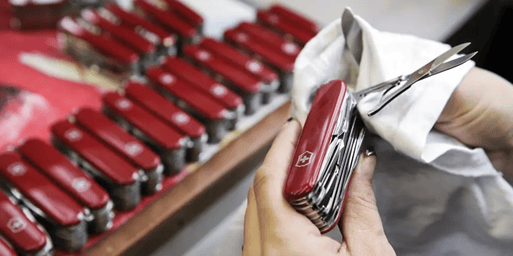
The Handy Man
Love the Swiss Army Knife
Friends of Branded!
Happy Saturday and I hope you had a great week.
This week the Branded team had the privilege of attending one of our favorite events each year, and it’s the conference that kicks things off, the ICR Conference.
This conference brings together hundreds of public and private company management teams, financial service providers, and institutional investors to gain a better understanding of consumer trends for the year ahead. One of the overarching takeaways from this year’s conference – optimism. Not unbridled optimism, but an overall constructive and positive outlook for the year ahead, and deal making. Love it!

Another takeaway or maybe better stated, a reinforcement of something I hold to be true, had less to do with the conference itself, but came from the many meals and hospitality experiences I had while spending time down in Orlando.
It’s the value that comes from the most underrated position in restaurants, the utility player.
In sports, every fan knows that championship teams have one. These players don’t lead the league in scoring and respectfully, they rarely get the headlines, and they certainly don’t command the biggest contracts. However, when someone goes down, when the game changes mid-stream or when things get messy, it’s the utility player that saves the day.

I feel fortunate to look at my work at Branded Hospitality as a cerebral sport and draw great value from the various team-sports I was lucky to play growing up.
In restaurants, it’s the “utility player,” the “handy man,“ or as Toby Keith called it, the “maintenance man“ (and we know from his song that “it’s just a high maintenance woman don’t want no maintenance man“) is often the difference between controlled chaos and total breakdown. (Who had Toby Keith as a reference in today’s H^2? Anyone?).
When you attend a conference with a few thousand executives that are all racing around a hotel property for meetings, panels, and presentations, and all needing to also be fed and served, it’s important to notice the people that are making that happen.
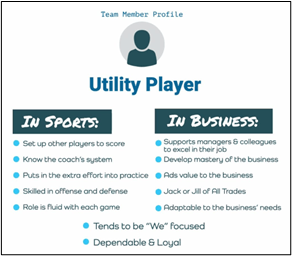
Every restaurant has utility players (even if they don’t call them that) and these players show-up in many forms.
I’m referring to the server who can jump in to host or tend bar without blinking. The line cook that can float between stations during a rush. The manager who can run FOH, fix a POS issue, calm an angry guest, and close the books. The dishwasher who helps prep when tickets pile up. The catering lead who can sell, execute, and recover when logistics go sideways (catering? Please be sure to checkout The Deal Room section below). 😊
These aren’t your “extra” employees, these are your operational insurance policies.
At the risk of angering any of the most sport enthusiast readers of the H^2, I’ll put forward that utility players are more important in restaurants than they are in sports.
Challenge? Let’s go
In sports, games are scheduled. In restaurants, demand is unpredictable, staffing is fragile and technology breaks down at the worst possible moment (even the very best tech platforms have issues every now and then).
Guests don’t care why something went wrong, they only care that it did.
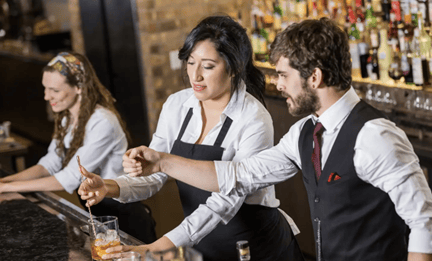
This is where utility players thrive! In restaurants, roles blur, priorities shift hourly and speed matters more than perfection. Restaurants are live-action problem-solving environments and that’s what utility players are built for.
Here’s the magic that utility players bring to restaurants (as well as other organizations of course), they’re not just task-doers, they’re pattern-recognizers.
The best utility players anticipate bottlenecks before they happen. They see across departments, not just their station. They understand flow, not just function. They know where to plug a leak or a hole (and they know how to do it fast).
Utility players don’t just fill gaps; they reduce friction across the entire system. This isn’t just labor, this is leverage!
Operators, friends, here’s a mistake that gets made too often. Utility players are often paid like replaceable labor, are overused without a development path and are praised privately but not invested in publicly.
Despite these management mistakes, operators are still surprised when these valuable players experience burnout or turnover. Too often, operators don’t realize it’s the utility player that’s the glue that’s helping to keep the operation together, but if your utility player walks out, the whole operation feels it, immediately!
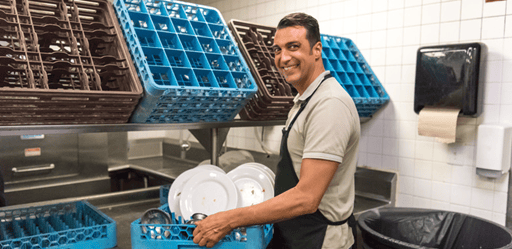
The best operators I know invest in their utility players b/c they recognize that if they commit to developing utility talent, they will get better shift coverage with fewer people. They will also get faster recovery from mistakes, higher morale and accountability and more resilient unit-level economics. Utility players don’t just help you survive the bad days; they raise your ceiling on the good ones.
Operators should re-think or at least reconsider their employee matrix. Rather than asking “who is the best server?” or “who is the fastest cook? consider, “who can adapt when things break? or “who can move the whole board when the game changes?”
It’s my conviction that the need and embracement of utility players is more important than ever b/c in today’s environment, with labor shortages, tech dependencies, and volatile demands from guests, it’s adaptability that’s the real MVP metric.
Of course, every great team, whether on the field or on the floor, is built around stars. We need our stars.
But it’s the utility players that holds the system together, absorb the chaos and can turn close losses into narrow wins.
In restaurants, these are not just role players, these are force multipliers, and the smartest operators know exactly who they are. If you want to build a resilient restaurant, don’t just reward your stars, invest in your utility players.
It takes a village.
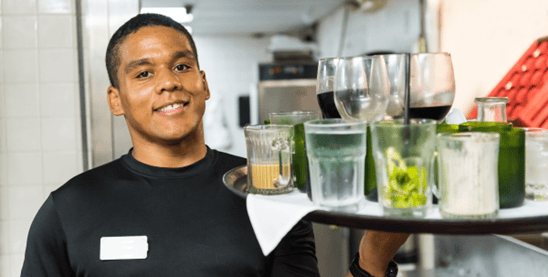
Ship the message as fast as you think

Founders spend too much time drafting the same kinds of messages. Wispr Flow turns spoken thinking into final-draft writing so you can record investor updates, product briefs, and run-of-the-mill status notes by voice. Use saved snippets for recurring intros, insert calendar links by voice, and keep comms consistent across the team. It preserves your tone, fixes punctuation, and formats lists so you send confident messages fast. Works on Mac, Windows, and iPhone. Try Wispr Flow for founders.
In this week’s Hospitality Hangout episode…Nate Fowler, CEO of Long John Silver’s, unpacks how he’s leading the turnaround of a 56-year-old restaurant brand without losing its core identity. Fowler shares insights on the role of technology, loyalty programs, and strategic partnerships in driving growth, along with a candid look at franchisee economics, unit-level performance, and procurement strategy. | 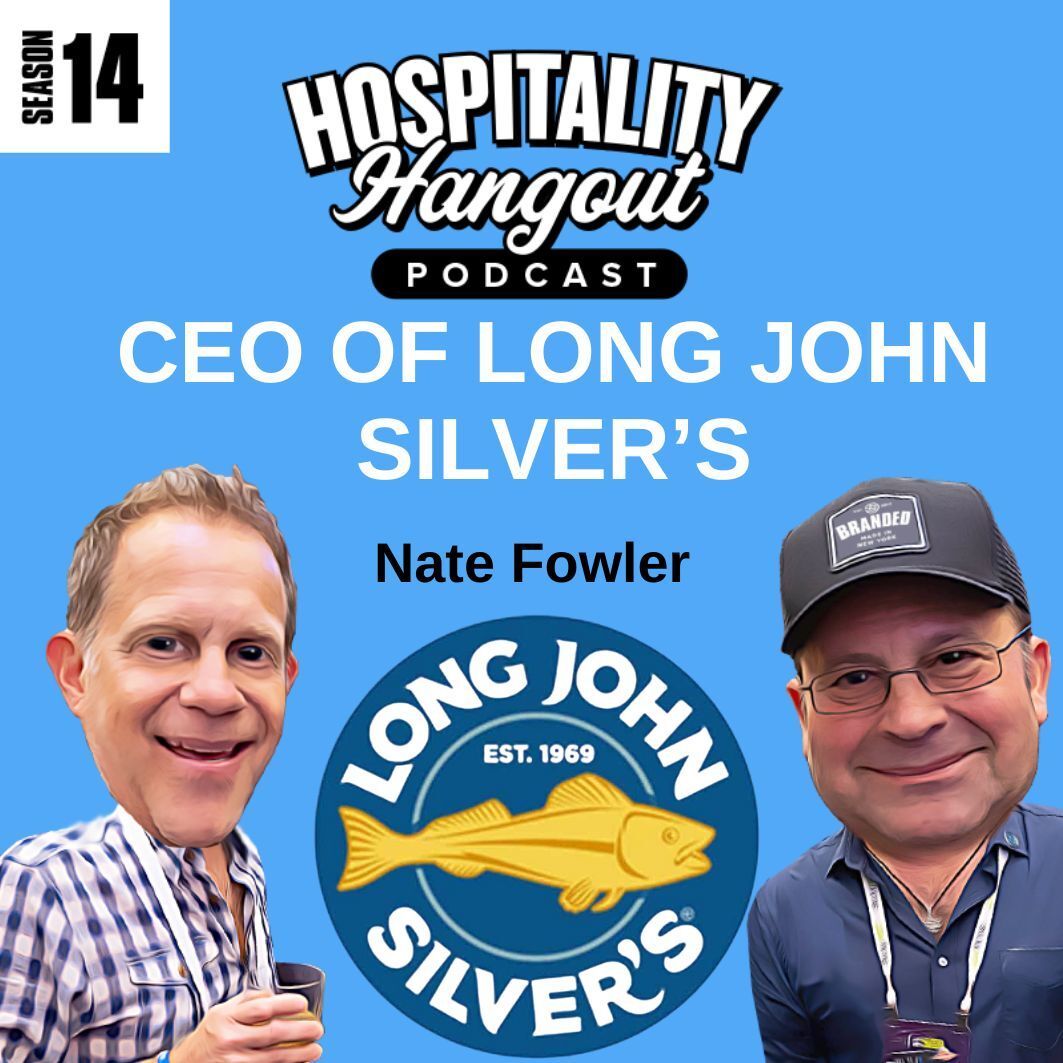 |
  |   |
Equipment policies break when you hire globally

Deel’s latest policy template on IT Equipment Policies can help HR teams stay organized when handling requests across time zones (and even languages). This free template gives you:
Clear provisioning rules across all countries
Security protocols that prevent compliance gaps
Return processes that actually work remotely
This free equipment provisioning policy will enable you to adjust to any state or country you hire from instead of producing a new policy every time. That means less complexity and more time for greater priorities.
Get the template for free today.

This week’s shout-out goes to Jim Bitticks, who was just promoted to CEO of Dave’s Hot Chicken and, yes, we’re taking partial credit.
Because, let’s be honest… appearing on The Hospitality Hangout is basically a fast track to the corner office. 😉
Jim’s journey is the kind of hospitality story we love to celebrate. From working at Jack in the Box at 15 (and not fully understanding what a franchise was) to leading one of the hottest restaurant brands on the planet, his career is a masterclass in hustle, curiosity, and saying “yes” to opportunity.
When Jim joined us, the conversation bounced effortlessly between billion-dollar growth, psychic career advice (shout-out to Joyce 🃏), pop-up tents in parking lots, and why medium is the correct spice level for first-timers. It was classic Jim: sharp, self-aware, and endlessly entertaining—with just enough humility to remind everyone that no success is ever truly overnight.


📉 How did Sweetgreen go from millennial magnet to millennial cringe?
🌶️ It’s official: this is America’s No. 1 hot sauce.
🧀 Kraft Heinz is splitting its mac and cheese empire. The Wall Street Journal explains the CEO shakeup and what it signals about legacy food brands navigating modern appetites.
🏨 A globe-trotting travel writer who has stayed at 1,000 hotels shares the 10 that you must visit in your lifetime.
🍸 It’s not just you: happy hour is quietly dying. Here is why after-work drinks are disappearing—and what’s replacing them.

I was once asked why Branded spends so much time focusing on off-premises solutions for restaurants. To be completely transparent, the person specifically asked why don’t restaurants just sign-up with DoorDash or Uber and call it a day.
This question or rather the conviction of this person ranks at number 68 on my long list of reasons why and how the hospitality industry is so misunderstood.
There is nothing easy about winning in the category of off-premises business, but thankfully, there are some great tech platforms that are working to help operators do just that (and I’ll give a quick shoutout here to our partners at both Olo and Chowly that are two of Branded’s favorite off-premises solutions for enterprise and SMBs respectively).
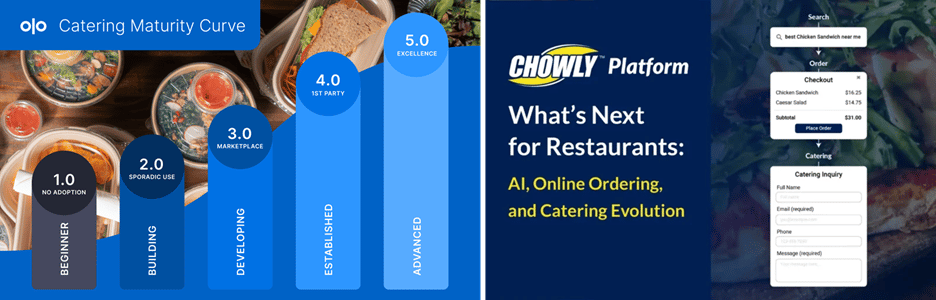
Until we have fully autonomous vehicles, the best off-premises business for restaurants is takeout and catering, but let’s be crystal clear, catering is NOT just a larger takeout order (and it’s certainly not just another delivery order).
Catering represents an important revenue opportunity for restaurants, but to succeed in catering, it must be treated as its own business line.
This is where too many restaurants are challenged b/c the catering customer is not the same as your delivery or takeout guests and in fact, the catering customer is often not even the end customer. Businesses are leaning into catering to help bring employees back to the office and catering orders are often placed by gatekeepers such executive assistants and office managers.
In addition to the gatekeepers, there’s also the operational challenges associated with catering and specifically how orders have the potential to disrupt the experience of in-store dining guests by overwhelming kitchens.
Again, catering isn’t takeout and it’s not delivery.
This week’s Deal Room is a call to action for restaurant executives to take control of your catering business and Branded is putting one of its newest portfolio companies, FamilyMeal, and our strategic partner, Crumbs forward as solutions to help you do just that!
Why are these our favorite solutions, b/c both share a most important characteristic, they’re operator centric!
FamilMeal is a free online ordering software platform for restaurants that makes it easier for your guests to order catering directly from your restaurants. As Branded’s Finance Guy, let’s quantify this, FamilyMeal saves you at least 7% on every order from your website (if I had a mic, I’d drop it right now). This is your white-label solution that helps you build your menu, set-up your account and provides hands-on support.
Crumbs, founded by one of the industry’s favorite daughters, Kelly Grogan, is a revenue-growth agency for restaurants and hospitality operators that helps them increase sales through catering. For so many restaurants, maintaining a dedicated team to drive a successful catering operation is a challenge (respect). This is where Crumbs comes in and help restaurants build, optimize, and scale catering offerings.
To learn more about FamilyMeal or Crumbs, please click here.
For investors who believe, as Branded does, that catering is an important source of revenues (and profits) for restaurant operators, let’s connect and talk about FamilyMeal. You can click here.

AI-native CRM

“When I first opened Attio, I instantly got the feeling this was the next generation of CRM.”
— Margaret Shen, Head of GTM at Modal
Attio is the AI-native CRM for modern teams. With automatic enrichment, call intelligence, AI agents, flexible workflows and more, Attio works for any business and only takes minutes to set up.
Join industry leaders like Granola, Taskrabbit, Flatfile and more.

Lainey Wilson |
Don’t just scroll—click! Congratulate everyone on making the B List and send some LinkedIn love their way.

The Insiders
 When AI meets law, cost, scale. Written by Michael Beck |  A clear manual for restaurant growth. Written by Rev Ciancio |
 How QSRs capture cravings after the whistle. Written by Melissa Hughes |  Why catering suddenly makes dangerous sense. Written by Jay Ashton |
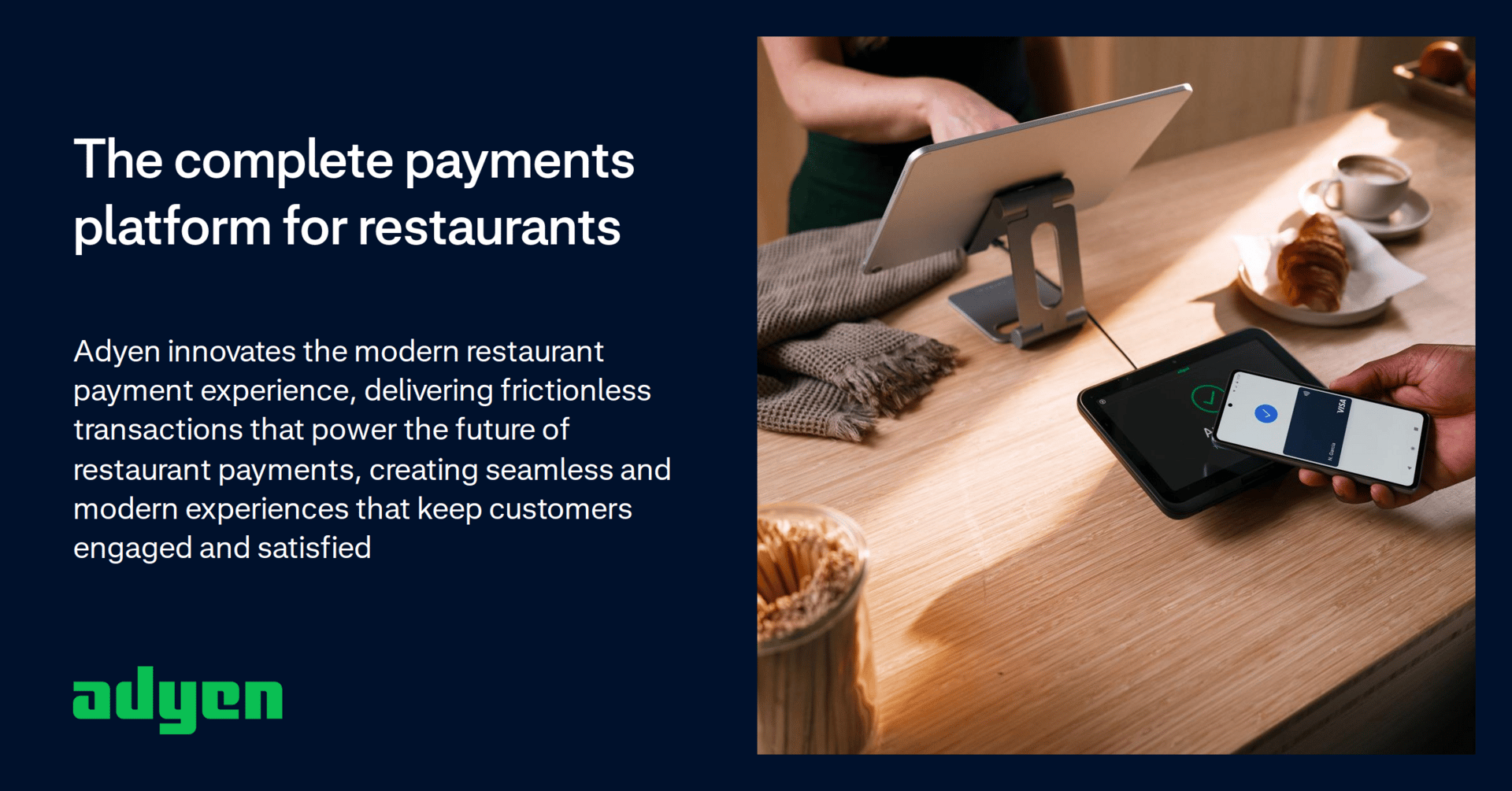
@hospitality.hangout Happy National Bagel Day!

That’s it for today!
See you next week, same bat-time, same bat-channel.
It takes a village!
Jimmy Frischling
Branded Hospitality
235 Park Ave South, 4th Fl | New York, NY 10003
Branded Hospitality is a foodservice growth platform with three integrated business lines—Ventures, Solutions, and Media. We invest in innovative tech and emerging brands, provide expert advisory and capital strategies, and amplify visibility through podcasts, newsletters, social, and events—creating a powerful flywheel that drives growth, brand strength, and lasting success.
Looking to get in front of 400,000+ hospitality movers and shakers? Dive into our media kit and see how we can help amplify your brand.