The Most Underrated Loyalty Strategy in Hospitality
It wasn’t the food that failed.
The server walked by seven times before even acknowledging they were there. The order took forever while their glasses sat empty. The food was fine, but the service was transactional and slightly dismissive—as if they were an interruption rather than valued guests.
They smiled politely. Paid the check. Left a reasonable tip.
And never came back.
The most dangerous guests aren’t the angry ones.
They’re the polite ones who don’t complain or ask for a manager.
No drama. No warning. Just not coming back.
That’s the moment most hospitality teams miss. Not the mistake, but the recovery.
And neuroscience explains exactly why the guest brain noticed everything.
Here’s a truth that feels counterintuitive: hospitality perfection is forgettable, but a beautifully recovered mistake makes a powerful impression.
Put more simply: A mistake followed by a genuine apology can build more trust than getting everything right the first time.
When we understand how the brain evaluates experiences, it makes perfect sense. The brain doesn’t evaluate experiences like a checklist. It encodes emotional contrast. When something goes wrong, the emotional stakes rise. And when that moment is met with ownership, empathy, and follow-through, the brain experiences one of the strongest trust-building shifts available to humans.
The Apology Effect
A genuine apology doesn’t just repair damage. It can deepen loyalty, strengthen relationships, and leave a longer-lasting imprint than perfection ever could. It has everything to do with the brain’s built-in bias for negativity.
Our brains are hardwired with a negativity bias — an ancient survival tool that makes problems hit harder than positivity registers. A cold entrée, a delayed check, or a misread reservation lights up the brain’s alarm circuits far stronger than all the perfect moments combined.
That’s why the old service adage “fix it fast, fix it well” matters neurologically. If you tackle the issue with empathy and speed, the brain doesn’t just calm down — it shifts into a mode that actually reinforces trust.
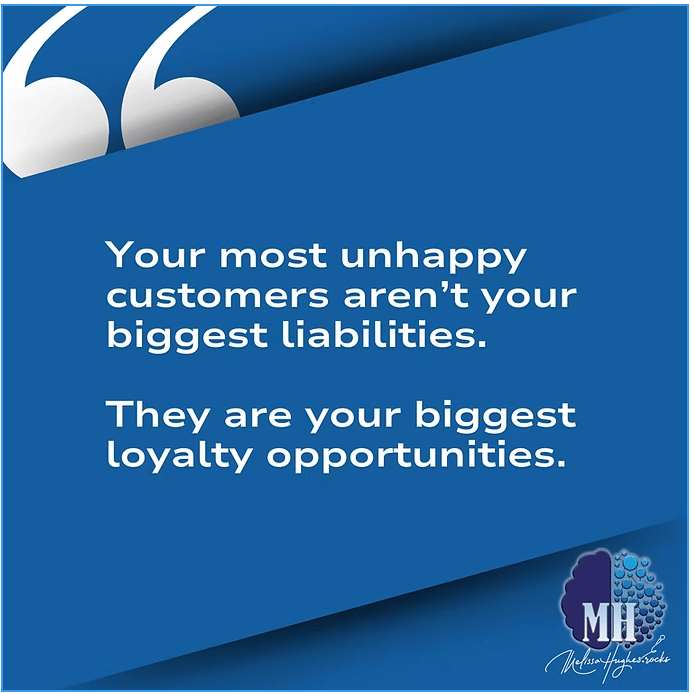
Mistakes don’t destroy trust. But the way we handle them can.
The Service Recovery Paradox — Hospitality’s Hidden Superpower
Handled well, a service failure can outperform perfect service in loyalty outcomes. How?
Relief — The threat is gone.
Surprise — Expectations blown away.
Gratitude — The guest feels genuinely seen.
Trust — Their brain says, “They’ve got my back.”
This emotional arc engages the brain’s reward system, deepening memory and connection far more than a flawless meal ever could. That’s the Service Recovery Paradox in action.
Language Matters
Not all apologies are equal. The brain can sniff out half-hearted language in milliseconds.
🚫 “Sorry you feel that way…” deflects responsibility.
🚫 “Sorry about that…” vague and hollow.
🚫 “The kitchen messed up…” shifts blame and sparks defensiveness.
Instead, choose words that match how the brain actually builds trust:
✅ Own it:
“I apologize. That’s on us, and it fell short of the experience we want for you.”
✅ Validate:
“I can see how frustrating this was.”
✅ Fix it:
“Here’s what I’m going to do right now…”
✅ Add unexpected value:
“And because this happened, we’d love to…”
✅ Follow up:
“I’ll check back shortly to ensure we’ve made it right.”
These steps aren’t just nice. They activate the brain’s fairness and social-connection circuits, shifting guests from frustration to calm, and from disappointment to loyalty.
But timing is important. Delay the response and the brain starts filing that negative experience into long-term memory. Move quickly, and you signal care, competence, and reliability. Speed isn’t just service agility. It’s trust cultivation.
Perfection Is Forgettable. Recovery Is Unforgettable.
Every time your team handles a service slip with authenticity, empathy, and intentional follow-through, you’re not just solving a problem. You’re building neural pathways of trust in your guest’s brain. That’s the ultimate kind of loyalty.
Snag the Effective Hospitality Apologies infographic here — a simple, science-backed tool you can download, print, and share with your team today!
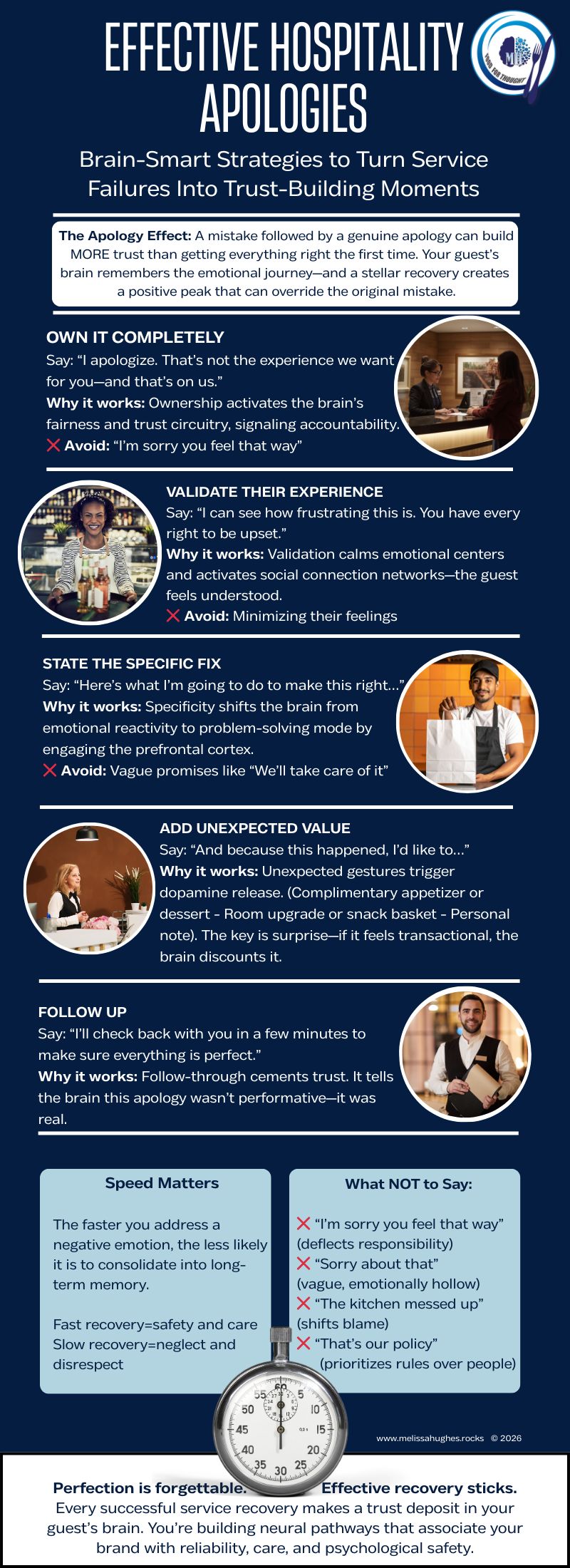
Mistakes happen. How we handle them matters.
This article is excerpted from Backstage Pass: The Science Behind Hospitality That Rocks, a practical, brain-based guide for restaurant owners and operators who want to design experiences that feel better to guests and work better for teams. In it, Dr. Melissa Hughes, breaks down the neuroscience behind guest behavior, service consistency, culture, and loyalty and translates it into tools operators can actually use.
Download your free copy of Backstage Pass with promo code BRANDED.