Turn Up the Revenue
Before a guest takes that first bite, their brain has already started tasting. Flavor isn’t just about ingredients. It’s multisensory. Visual presentation matters. Texture matters. Temperature matters.
And sound matters more than most operators realize.
In fact, excessive noise consistently ranks as one of the top complaints in restaurants. ahead of service issues, crowd size, and sometimes even food quality. Kitchen clatter, crowd volume, and poorly calibrated background music can reduce perceived flavor and lower the likelihood that guests return.
Sound doesn’t just shape atmosphere. It changes taste.
Research over the last decade has revealed something remarkable: what we hear alters what we think we’re tasting. Gastrophysicist Charles Spence calls sound the “forgotten flavor sense.”
Amplify the crunch of a chip, and people rate it as fresher. Increase the fizz of carbonation, and beverages taste more vibrant. Play Italian music while serving Italian food, and guests perceive it as more authentic.
In one famous collaboration, chef Heston Blumenthal paired seafood with the sound of ocean waves. Diners rated the fish as fresher and saltier simply because of the soundtrack. Even bacon-and-egg ice cream can taste more “bacony” or more “eggy” depending on whether guests hear sizzling bacon or clucking hens.
Sound is seasoning.
But there’s another layer operators often miss.
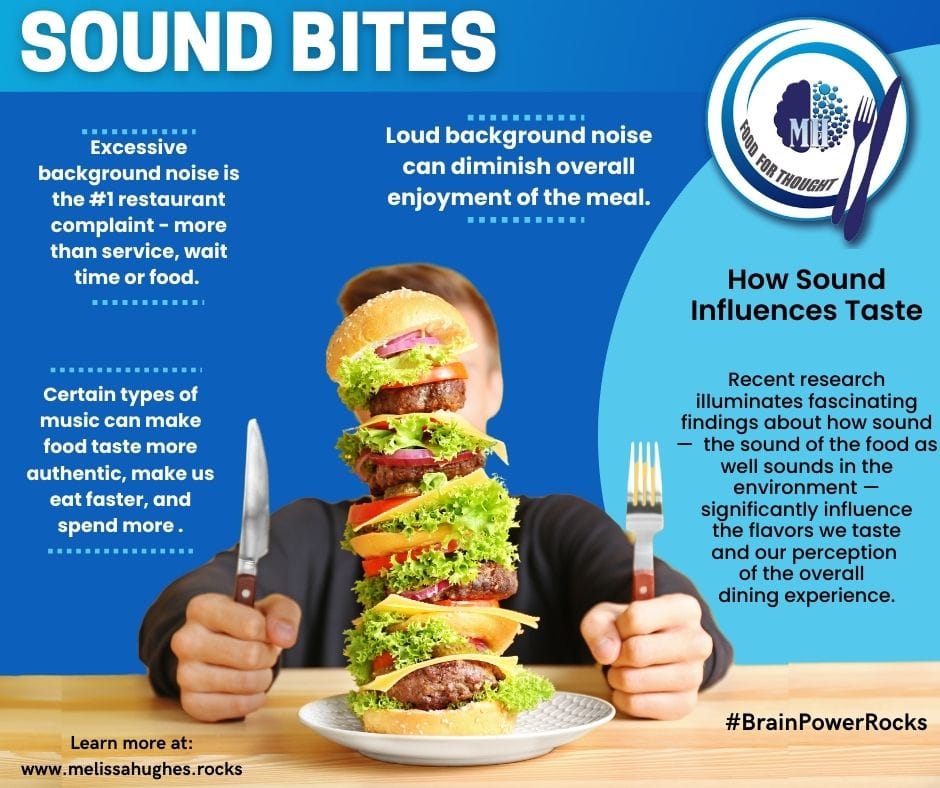
Sound has a powerful influence on the guest experience.
Rhythm Regulates Revenue
Our brains are electrical. Neurons fire in rhythmic patterns called brainwaves, and those rhythms naturally synchronize with external sound.
This phenomenon, called brainwave entrainment, means the tempo in your dining room can literally influence the tempo of your guests’ nervous systems.
120–140 beats per minute aligns with faster beta-wave activity: alert, activated, efficient.
60–80 beats per minute aligns with slower alpha states: calm, connected, unhurried.
Fast beats subtly increase chewing speed and compress time perception. Guests move through meals more quickly. Table turns increase. The experience feels energetic and transactional.
Slower music stretches perceived time. Guests linger. Conversation deepens. Another glass feels natural. Dessert feels justified. Multiple studies show that slower, softer music is associated with higher beverage sales and increased average check size.
Same menu. Different soundtrack. Different check average.
And volume matters too. Loud environments dull sweetness and amplify savory flavors. This hich helps explain why tomato juice dominates on airplanes at cruising altitude. When noise rises, sensory perception shifts.
Sweet notes fade. Umami intensifies. Satisfaction changes.
Lighting, Temperature, and Mood
Lighting and temperature might not show up on your balance sheet, but they’re silently influencing dwell time, guest comfort, and ticket averages.
Soft, warm lighting relaxes the amygdala. Your guests’ internal threat detector signals, “You’re safe. Stay awhile.” That’s why a dimly lit booth feels intimate, inviting, and Instagram-worthy.
Cool, bright light flips a different switch: it activates the prefrontal cortex, the brain’s “get-things-done” zone. There’s a reason a cozy bistro feels different from a coffee shop.
And temperature has a powerful influence, too. Studies show guests linger longer and spend more when the room sits in the 72–74°F range—not too hot, not too cold, but the Goldilocks Zone of hospitality.
Too cold, and cortisol (the stress hormone) spikes. Guests fidget, eat faster, and leave.
Too warm, and dopamine dips. Suddenly, energy tanks and “check please” instead of “one more drink” mode.
It’s Not Manipulation. It’s Emotional Architecture.
The question isn’t whether your space is influencing behavior. It is whether you are doing it on purpose. If your playlist is an afterthought, you’re leaving both experience and revenue to chance.
I created a Restaurant Music & Mood Guide for operators who want to move beyond “good vibes” and start using music as a performance tool.
Inside, you’ll learn:
How to match BPM to business goals
Daypart tempo strategies
Genre alignment by concept type
How to adjust music to manage rush vs. linger
The neuroscience behind why it works
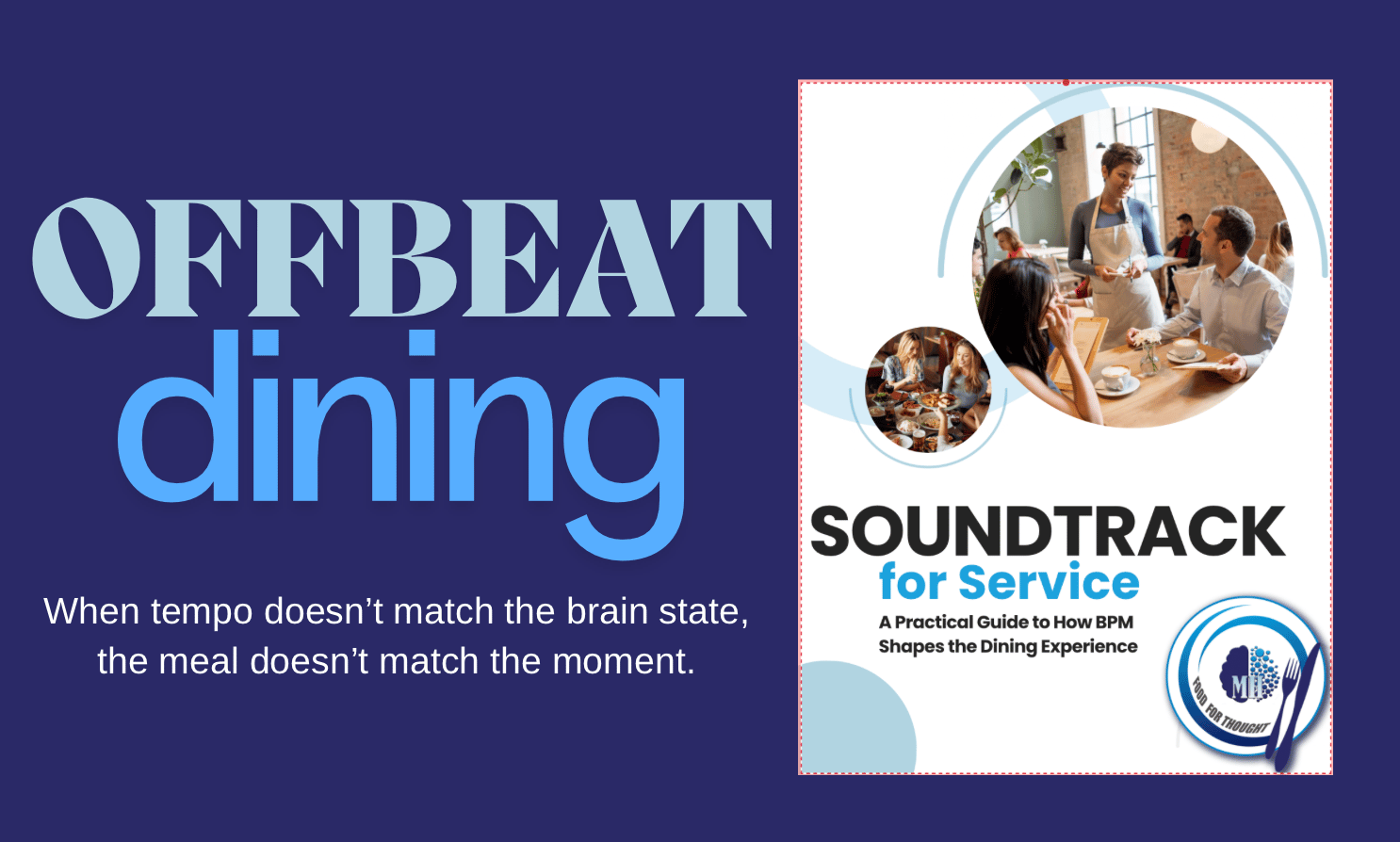
Download your free Soundtrack for Service guide here.
Hospitality is more than service and comfort. It’s chemistry. Literally. Great hospitality lives in the invisible details—the sensory cues that quietly tell guests how to feel before a server ever says a word.
When you align your playlist, lighting, and temperature with the kind of experience you want to create, you move from serving food to staging emotion. It’s not manipulation; it’s emotional choreography.
Hospitality isn’t art or science.
It’s both—and when it’s done right, it hits all the right notes.
Dr. Melissa Hughes is a dynamic keynote speaker and author of Backstage Pass: The Science Behind Hospitality that Rocks. She’s known for blending cutting-edge brain science with contagious energy, humor, and heart. Melissa delivers unforgettable keynotes that spark mindset shifts, boost engagement, and drive measurable, lasting transformation.


