The Hospitality Hangout
  • Home
  • Episodes
  • About
  • Contact
  • Blog
  • Reviews
    All Reviews Leave a Review
    Rate on Apple Podcasts podcast player icon Rate on Apple Podcasts
    Rate on Spotify podcast player icon Rate on Spotify
  • Videos
  • Newsletter
  • Search
Apple Podcasts Spotify Youtube Music Amazon Music iHeartRadio PocketCasts All Players
Follow
Apple Podcasts podcast player icon Apple Podcasts Spotify podcast player icon Spotify Youtube Music podcast player icon Youtube Music Amazon Music podcast player icon Amazon Music iHeartRadio podcast player icon iHeartRadio PocketCasts podcast player icon PocketCasts All Players
Search
Nov. 14, 2026

Frenemies with Benefits

Hospitality Headline

TOP OF THE FOLD

Sponsored byRoku

The Odd Couple

Amazon swapped Grubhub for Uber Eats this week. The bigger story is how many layers now sit between your kitchen and your guest.

by Jimmy Frischling
The Odd Couple

Friends of Branded!

Happy Saturday and I hope you had a great week.

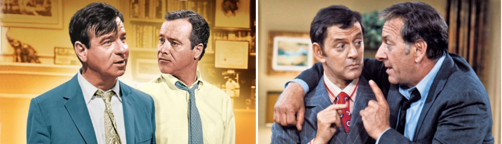
In 1965, the great Neil Simon put two divorced men in one Manhattan apartment and called it The Odd Couple. Felix Ungar is a fussy neat freak. Oscar Madison is a sportswriter whose apartment looks like a crime scene. They have no business living together, and they do it anyway, b/c neither one can make it work alone. It became a Broadway hit, then a 1968 movie with Jack Lemmon and Walter Matthau, then a TV series with Tony Randall and Jack Klugman that ran in reruns forever.

The TV show never cracked the Nielsen Top 25 during its original run from 1970 to 1975 and was saved from cancellation every single year before becoming a massive hit in syndication. That was lucky for me b/c it was from the reruns that I was introduced to and fell in love with the show.

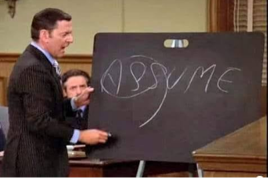
One of my favorite quotes (that I use more often than any member of the Branded team likes) comes from the Odd Couple: “you should never assume, because when you ASSUME, you make an ASS out of U and ME.”

The Odd Couple - Assume
The Odd Couple

I know, I know, I know. I promised the Rat Pack I would be more current with my pop culture references, and here I am opening with a play from the Johnson administration. 😊

This week's Top of the Fold is about a different odd couple, one that moved in together on Thursday, November 5th, and the many restaurants that are going to be cooking for both of them.

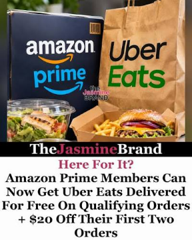
Amazon ended its Grubhub partnership and made Uber Eats the restaurant delivery partner for U.S. Prime members. Much has been written about this change, and no one needs me to explain how this partnership works, but if you’re looking for that type of intel, here are two links to help you understand it:

From Uber - Amazon Partnership FAQFrom Amazon - Uber Eats with Amazon Prime

This partnership was no small announcement and Wall Street noticed. DoorDash shares fell roughly 13% to 14% on the day of the announcement. Uber slipped about 2% too, which tells you the market isn't fully sure who got the better end of this.

After including Neil Simon in this week’s TOTF, let’s now show some range and include the great Billy Shakespeare and channel his phrase, Strange Bedfellows.

In The Tempest, a jester named Trinculo gets caught in a storm, crawls under a cloak next to Caliban to wait it out, and says, "Misery acquaints a man with strange bedfellows."

Notice the order of operations: storm first, bedfellows second.

Amazon and Uber have spent the better part of a decade on opposite sides of the bed. So, what's the storm that brought them together? Hello DoorDash!

Follow the money friends. On October 29th, DoorDash agreed to acquire Instacart for $17 billion. Restaurants and groceries under one roof. And here’s a fun footnote: Bloomberg reported that Instacart held talks with Uber before walking away. So, Uber lost the grocery partner it wanted, and a week later landed the retailer nobody saw coming.

Depending on whose data you trust, DoorDash holds somewhere between roughly 60% and two-thirds of U.S. food delivery, Uber Eats roughly a fifth to a quarter, and Grubhub mid-to-high single digits.

Then there's Walmart, which got into restaurant delivery this year: Subway in June, Dunkin' in September, ordered in the Walmart app and delivered on Walmart's own last-mile network. Walmart says its stores sit within 10 miles of about 90% of the U.S. population. That's not a delivery app. That's a delivery footprint.

When the biggest food delivery player in the room is buying the grocery leader and the biggest retailer in the country is building its own restaurant channel, old rivalries get very friendly, very fast.

Amazon and Uber

This is Amazon's third swing at restaurant delivery (and readers of H^2 know how much I love the magic number that is “3”). 😊

First, it built a network (Amazon Restaurants) and shut it down. Then it rented one (Grubhub), with warrants for an equity stake that it cashed out in December 2024. Now it's renting a bigger one. The lesson is clear: Amazon doesn't want to be in the restaurant business; it wants to be in the Prime retention business. Swapping a single-digit-share network for one with roughly a quarter of the market, across nearly 10,000 U.S. cities and towns, makes a $139-a-year membership a lot stickier.

For Uber, this is the counterpunch. Amazon has an enormous U.S. Prime base (it doesn't disclose the number, but outside estimates run north of 180mm), and Uber now gets a seat in front of it without paying to win each of those customers one at a time. It also keeps DoorDash from cutting the same deal, but the deal Uber cut comes with a concession: on these orders, the customer opens Amazon, not Uber. Uber is trading app traffic and the direct relationship for volume and scale. That's a real trade, and the 2% dip suggests not every investor loves it.

Amazon wants to own the front door. Uber is now positioned to own the back door.

So, who owns the kitchen? Who owns the guest? Where does this all leave the restaurants?

For twenty-plus years, the delivery platforms intermediated the restaurant. DoorDash, Uber Eats and Grubhub got between the kitchen and the diner and, little by little, took ownership of the guest. Now the retailer is intermediating the intermediaries (the delivery platforms). That's two layers between the person cooking the food and the person eating it.

Operators, are we being reduced to fulfillment centers?
Fulfillment centers

Not literally. Our name is still on the listing, and our food is still in the bag, but functionally, this model treats a restaurant a lot like a third-party seller in an Amazon warehouse. And here comes the hard truth, when you're competing inside a retail super-app, you're competing on promos, delivery times and price filters, not on your story or your hospitality. That's how a brand slowly becomes a SKU (stock keeping unit).

A few weeks ago, in "Party of the Second Part," I wrote that round one of the delivery wars was about convenience and logistics, and round two is about who owns the customer relationship. Round two just got a new contestant, and for now, the answer to "who owns the guest" on these orders is the company with the cardboard box and the smile on it.

Let’s focus on the operators here b/c that’s where Branded likes to play. We will, however, hold to the same rule as last time: zero third-party bashing here. These platforms drive real volume, and for plenty of operators, incremental orders are what cover fixed kitchen costs on a slow Tuesday. Prime is about to send more of those orders your way. Here’s the point, the job isn't to refuse them, it's to price them, plan for them, and convert them.

Below are a few ideas I’d suggest considering.

Engineer the menu for $25 b/c that new threshold is a gift if you build for it. Family bundles, combos and high-margin add-ons push carts past $25 while protecting your food cost. A $23 average check is now a problem worth solving.

Packaging companies just became even more important b/c you need to make your bag a billboard. Amazon owns the checkout, but you still own what's inside the bag. QR codes, bounce-back offers and loyalty sign-up incentives are how a one-time Prime order becomes a repeat direct guest. It's the only marketing real estate on this order you control, so use it.

Separate the dining room from the loading dock. If Prime delivers the volume spike, don't let it land on your dine-in guests. Dedicated packaging stations, an off-premises menu built to travel, and clear staffing for both. Nobody at table 12 should be waiting on their entrée b/c a courier is waiting on a family bundle.

Know your channel P&L. Run the numbers on these orders separately: commission, packaging, labor, promo cost. If you can't say what a Prime order actually contributes, you don't have a channel strategy, you have a ticket printer.

Here's the line I'd tape above the expo station: Volume pays the rent. Data builds the equity.

Take the volume. Just don't confuse it with owning the guest.

Felix and Oscar never really changed each other. They moved in together b/c the rent made sense, and they spent every episode guarding their side of the apartment. Amazon and Uber are no different. This is a transactional arrangement between two companies that will keep competing on delivery, advertising and robotaxis long after this press release fades. They'll split the rent as long as the storm keeps blowing.

The restaurant, meanwhile, is the one doing the cooking. Just make sure you're not also the one stuck doing the dishes.

Please be sure to continue to The Deal Room, b/c the delivery landscape has an emerging player and it’s proving that what’s old is new again, b/c First-Party delivery is making its return.

It takes a village!
It takes a village


Your next regular is on Roku

Roku Ads Manager: Reach your next customer with streaming TV ads

Empty tables cost you revenue you can't get back. Casual diners are already streaming on Roku, and self-serve CTV ads from Roku Ads Manager help you reach them in every market, down to the ZIP code. The result: more diners tonight and more repeat customers over time.

Sign up today

YOUR WEEKEND LISTEN

The Hospitality Hangout

The Hospitality Hangout: White Castle: The Burger People Plan Road Trips Around

Why do people plan trips around White Castle? CMO Jamie Richardson joins Hospitality Hangout to talk about lifelong Cravers, family ownership, the story behind the Crave Case, and bringing sliders from late-night restaurant runs to your freezer.

SpotifyApple PodcastsYouTube MusicAmazon Music
 

THE DEAL ROOM

The Craving and the Checkout

If this morning's Top of the Fold was about how many layers now sit between your kitchen and your guest, The Deal Room is about a partnership trying to take them away.

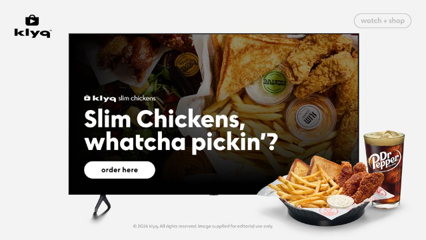
On November 9th, Slim Chickens launched ordering straight from the Samsung Smart TV home screen, through a partnership with klyq (owned and operated by NBTV) and Gett.

Here are a few numbers:

  • Slim Chickens: 300+ locations across 34 U.S. states, plus international units in the UK, Germany, Turkey and Malaysia, with a stated goal of 600+ restaurants over the next decade.
  • klyq: a shoppable streaming marketplace built on NBTV's patented BuyBar platform, available on 80mm+ U.S. Samsung Smart TVs and expanding to Vizio, Apple TV and Google TV.
  • Gett: runs First Party Everywhere (FPE), a direct-to-merchant ordering network with 40,000+ partner restaurants. Gett launched FPE just days earlier, on November 5th.

Slim Chickens on Samsung TV

Full disclosure, and a proud one: NBTV (klyq's parent company) and klyq are both Branded partners, so please weigh my enthusiasm accordingly.

Here's how it works. A Slim Chickens ad appears on the Samsung TV home screen. The viewer clicks it (or klyq’s it 😊), watches some short brand content, builds an order in the BuyBar, and checks out with the remote. No app download, no QR code, no phone.

Here's the part that matters for The Deal Room reader: the order runs through Gett's FPE network straight into Slim Chickens' own first-party ordering platform, the same one behind its app and website. There's no marketplace in the middle. The guest pays Slim Chickens' own menu prices, with no marketplace markup. Nothing changes in the kitchen and there's no new equipment, so the order just shows up like any other app order.

NBTV co-founder and CEO Nick Buzzell put the problem well: "Restaurants have been advertising on TV for 70 years and asking people to remember them later."

That's the whole gap. TV has always created the craving. Then the guest had to pick up a phone, open an app (usually somebody else's), and search for you, hoping nobody else's promo got to them first. Slim Chickens' VP of brand performance, Ben Turner, called the TV "where people get hungry," and he summed up the bet in one line: "We're turning TVs into Slim Chickens counters."

Put this week's two stories side by side and you can see the whole delivery map:

Third party is consolidating. DoorDash is buying Instacart for $17 billion. Amazon swapped Grubhub for Uber Eats. The marketplaces are getting bigger, and now they sit inside other people's apps.

Second party arrived. A few weeks ago, Olo launched its consumer app, giving guests marketplace-style reach while restaurants keep direct-channel economics. (Full disclosure, again: Olo is a Branded partner.)

First party is going on the road. Here's what's new. First party has always had the best economics and the worst distribution. You keep the margin and the data, but you have to talk a guest into downloading your app and then convince them to open it again. Most restaurants lose that fight.

Gett's pitch flips it. Don't make the guest come to your app. Take your app's checkout to wherever the guest already is: the TV, a video game, a social feed, a hotel, and (here's the big one) AI assistants. As Gett's CEO, Paul Stoltz, put it, "TV is about to become one of many new consumer front doors for how people discover brands and order from their favorites."

Front doors. Sound familiar? This morning, Amazon and Uber were fighting over who owns the front door. Gett's bet is that there won't be one front door. There'll be dozens, and the restaurant should own the checkout behind every one of them.

One more thing I liked: per his Food On Demand bio, Stoltz was a leader at JoyRun when Walmart bought it in 2021, and he then helped build Walmart's in-house restaurant ordering. Yes, the same Walmart restaurant channel from this morning's Top of the Fold. He's seen this movie from the retailer's side.

Let's land this on the P&L, b/c that's where it matters.

C-Store News puts marketplace commissions at 20% to 30%. On a $40 order at a 25% commission, that's $10 going out the door. A first-party order keeps most of that $10 (minus whatever your ordering stack, payments and delivery cost you).

A first-party order tells you who ordered, what they ordered and when. That's what lets you send a bounce-back offer, grow loyalty and recognize a regular. A marketplace order mostly tells the marketplace.

On your own channel, you set the menu price. Nobody else is adding a markup between your menu and your guest.

On a marketplace, you're a tile in a grid. On your own channel, you're the whole screen.

Now, I promised you I'd always give it to you straight, so here's the other side. This is a pilot in one market, with no volume or conversion data yet. Nobody has disclosed what Gett or klyq charge, so the margin math above is the ceiling, not the net. And the release doesn't say who carries the bag. If the courier is a white-label delivery service under the hood, that's still a cost on the P&L, even if the guest relationship stays with you.

And here's the lesson from "Party of the Second Part" that still holds: you can't guilt a guest into ordering direct. Lower cost to the restaurant won't change consumer behavior. Convenience will. That's why this is interesting. It doesn't ask the guest to do anything harder. It asks them to do something easier: order from the couch, in the moment, with the remote they're already holding. As Buzzell said, Slim Chickens understood "that the craving and the checkout should happen in the same moment."

The takeaway: Third party rents you the guest. First party lets you keep them.

Take the marketplace volume when it makes sense. But every time a new front door opens (the TV, the AI assistant, whatever comes next), make sure your checkout is the one behind it.

The deal room


THE SHOUT OUT, POWERED BY ORACLE

A New England Institution, Under New Management

Founded in 2022. Nearly 500 restaurants by the end of 2026.

That's the Craveworthy Brands story in two lines, and this week it got a new chapter. On November 10th, Craveworthy announced that an affiliate has agreed to acquire New England Authentic Eats, the Dedham, Massachusetts-based parent of Papa Gino's Pizzeria (JB, this one's for you).

Full disclosure, and a proud one: Craveworthy is a Branded partner, and we've had a front-row seat for this ride from the beginning. So yes, weigh my enthusiasm accordingly. I'm cheering anyway.

Craveworthy Brands

Here are a few numbers:

  • 160+ restaurants and about $160mm in annual revenue join the Craveworthy family. It's Craveworthy's largest acquisition to date.
  • Nearly 500 locations across the portfolio once the deal closes, which is expected by December 31st.
  • $300mm+ in systemwide sales across Craveworthy's 20+ concepts before this deal.
  • Wing It On!, the Connecticut-born wing brand that's already in the Craveworthy portfolio, is going into every Papa Gino's in the region as a co-brand. That takes it from 45 restaurants to more than 145.

Papa Gino's has been around since 1961, when it opened in East Boston. It filed for bankruptcy in 2018 and was bought by Wynnchurch Capital in 2019, and its footprint has shrunk since. Under Craveworthy, it keeps its name, its menu and its identity. What it gets is the platform behind it: shared purchasing, technology, training and back-end systems.

Founder and CEO Gregg Majewski put the playbook in one sentence: "We protect what makes a brand special, then put our full platform behind it."

Why I’d like operators to pay some attention to this.

Look at the Wing It On! piece. It's the smartest line in the release. Adding 100 new units the traditional way means 100 leases, 100 build-outs and 100 grand openings. Co-branding them into restaurants you already own means no new leases and no new real estate, just more sales from the same four walls, the same staff and the same back-end. Gregg said it simply: "Pizza and wings belong together. But the menu is only the start."

He's right on both counts. Pizza and wings make the kind of bundle that clears a $25 delivery minimum without breaking a sweat (see what I just did here as I tied this back to the Top of the Fold? 😊). And the bigger idea is the platform. Craveworthy has said it plans to make acquisitions of similar size every six to nine months. It's already showing what a shared platform can do, from Crave Kitchen at Georgia Tech (one kitchen, seven brands) to a portfolio that's grown to nearly 500 doors in about four years.

Last week I wrote about the barbell, and how brands that have been through the wringer need a turnaround sponsor. That's what this is. A beloved regional brand with a rough decade behind it is getting a sponsor who builds platforms and doesn't strip-mine them.

Congratulations to Gregg, Josh Halpern, Crave’s Chief Business Officer, to its new Chief Financial Officer, Keith Kravcik (I see you Mr. Kravcik) and the entire Craveworthy team, and welcome to the family, Papa Gino's. New England, your pizza is in good hands.

Papa Gino's


Big buying power. Bigger cost savings.

Foodbuy Foodservice

Foodbuy Foodservice helps operators reduce costs, improve efficiencies, and simplify procurement with strategic sourcing solutions. Contact our sales representative HERE for additional information on how Foodbuy Foodservice can support your operation.

Become a Member
 

WHAT WE'RE READING THIS WEEK

✈️ Chase Sapphire Reserve is making a major change to its luxury travel perks in 2027– Fast Company

🥃 Rusty Nail Cocktail– Food & Wine

⏰ Buying time can make you happier, but there’s a catch– Fast Company

👟 New Balance 1980s Dad Shoe Relaunch Draws 30K Virtual Queue– Inc.


THE B LIST

10 names to know this week

Tricia Tolivar

Paul Stoltz

Ashley Thiel

Rachel Citera

Donnie Wahlberg

Lawrence Longo

Kimberlyn Spector

Christopher Cameron

Michelle Rudd

Steele Platt

Know someone who should be on this list, or someone who'd want to see it? Forward this email or share it with your network!


MY POINT OF VIEW

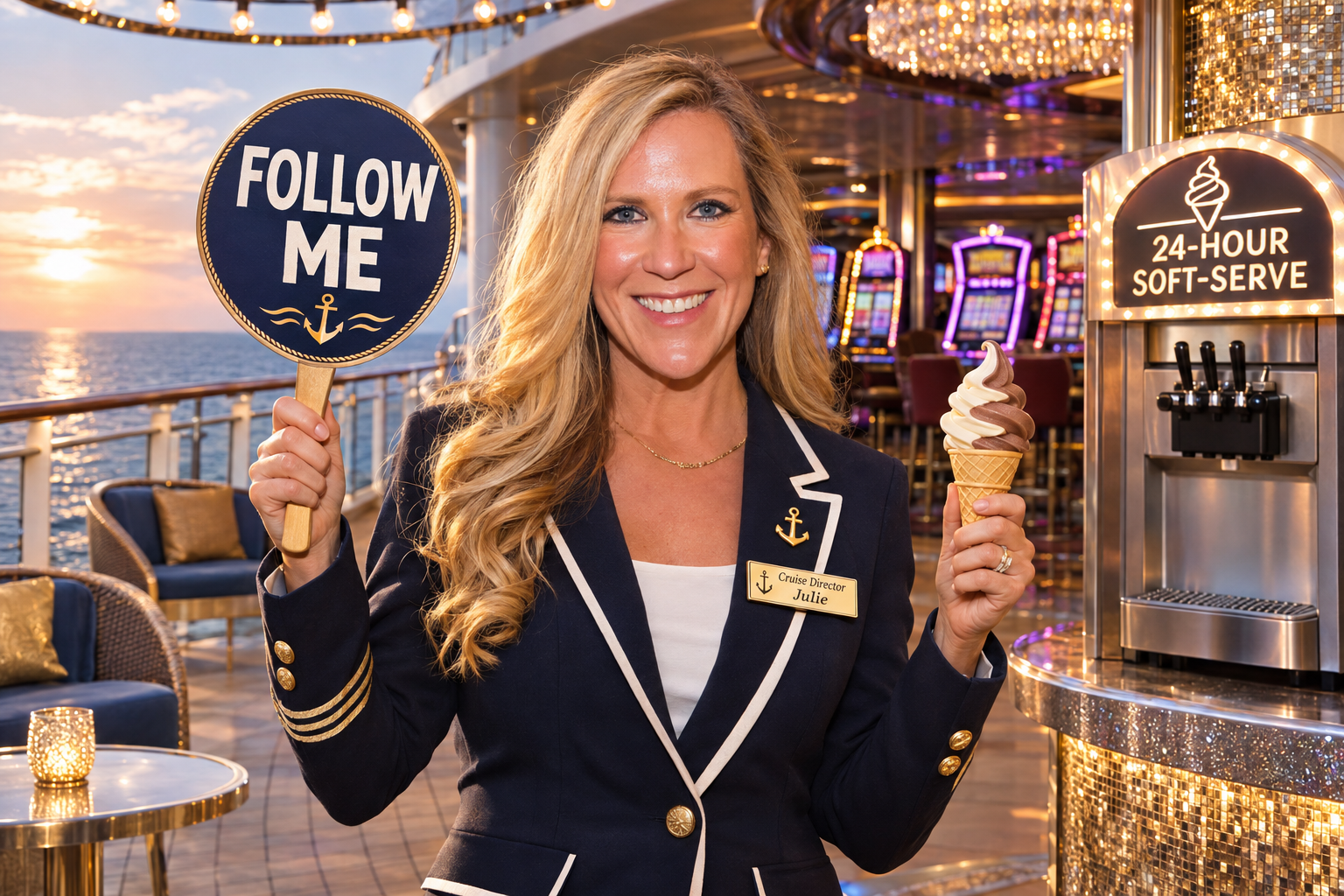
Adventures in Cruise Directing

by Julie Zucker

Adventures in Cruise Directing

One night after dinner in Las Vegas this past week at the RFDC conference, I found myself walking through one of the “older” casinos stuck behind a large group of tourists who were completely lost. They were traveling in a herd, stopping suddenly, changing directions, and somehow managing to take up the entire walkway at once.

A friend I was with said, “What we need is one of those ‘follow me’ sticks that tour guides hold up.”

The joke then quickly turned into us feeling like we were on a cruise ship. Cheesy? Check. Smoky? Check. Pre-batched drinks? Check. Large groups wandering around together with absolutely no idea where they were going? Check, check, check. Once we saw it, we couldn’t unsee it.

The casino had become one giant cruise ship that just happened to be permanently docked in the middle of the desert. We were passengers attempting to find our cabin after one too many stops at the unlimited beverage package. (Kidding, we were totally responsible adults, but we were definitely lost and couldn’t find which way the Ride Pickup door was).

Read this week's POV


THE INSIDERS

The biggest entertainment launch in history is full of restaurants.

The biggest entertainment launch in history is full of restaurants.

None of them are yours.

By Michael Beck · Read the full piece

 
I Know Exactly Where Your Guest Retention Answers Are. Can I Show You?

I Know Exactly Where Your Guest Retention Answers Are. Can I Show You?

Purchase data shows what guests buy, not why. Listening to guest sentiment led Handcraft to its best gluten-free sales week in three months.

By Rev Ciancio · Read the full piece

 
Gen Z Employees Aren’t Lazy. So Why Are They Quitting?

Gen Z Employees Aren’t Lazy. So Why Are They Quitting?

Gen Z now fills most restaurant shifts. The restaurants that keep them have discovered the secret sauce.

By Melissa Hughes · Read the full piece


That's it for today!
See you next week, same bat-time, same bat-channel.
It takes a village!

Jimmy Frischling
Branded Hospitality
jimmy@brandedstrategic.com

235 Park Ave South, 4th Fl | New York, NY 10003

Branded Hospitality is a foodservice growth platform with three integrated business lines: Ventures, Solutions, and Media. We invest in innovative tech and emerging brands, provide expert advisory and capital strategies, and amplify visibility through podcasts, newsletters, social, and events, creating a powerful flywheel that drives growth, brand strength, and lasting success.

Looking to get in front of 400,000+ hospitality movers and shakers? Dive into our media kit and see how we can help amplify your brand.

HOSPITALITY HEADLINE

Join the list!
Join 100,000+ other listeners and get updates on new episodes!
Email has been submitted.
By signing up, you agree to receive email from this podcast.
Please complete the reCAPTCHA verification

Listen On

Apple Podcasts podcast player logo
Spotify podcast player logo
Youtube Music podcast player logo
Amazon Music podcast player logo
iHeartRadio podcast player logo
PocketCasts podcast player logo

Recent Episodes

  • White Castle: The Burger People Plan Road Trips Around
  • The Foodfluencers: Dana’s Bakery Started With a Craving for Birthday Cake Macarons
  • Einstein Bros., Bruegger’s, Noah’s and Manhattan: Four Takes on the Morning Bagel
  • The Foodfluencers: One Trick Pony on Becoming Your Favorite Peanut Butter
  • Mellow Mushroom Refuses to Be Just Another Pizza Chain
  • The Foodfluencers: Gato Dates Went From Shabbat Dinner to Erewhon
  • Farrelli’s Pizza and Why People Come Back for More Than the Pizza
  • The Foodfluencers: Why Alice Mushrooms Wants You to Eat Chocolate Every Day
  • No Child Should Go Hungry: Billy Shore on Building Something Bigger Than Yourself
  • See all →
The Hospitality Hangout Logo

#1 Hospitality Podcast

  • Episodes
  • About
  • Reviews
  • Contact
  • Blog
  • Sponsors
  • Videos
  • © 2026 The Hospitality Hangout
  • Consent Preferences